Day of the Dead: Part 2. Bones, Jaguars & the Refusal to Forget
Ten more takeaways from Shaun Johnson’s deep dive into death, memory, and meaning
In Part 2 we head to rural Mexico, ancient cosmologies, dug-up ancestors, and some uncomfortable truths about how badly modern societies handle death.
1. Rural Day of the Dead Is Quieter — But No Less Powerful
Away from Mexico City’s parades and nightclubs, rural Day of the Dead celebrations are private, family-centred, and intimate. Less spectacle, more reunion. Fewer skeleton costumes — but deeper continuity with older traditions.
2. Marigolds Are Spiritual GPS
Marigolds aren’t just pretty. Their bright colour and strong scent were believed, since pre-Hispanic times, to guide spirits home. Petal paths lead from cemeteries to houses; arches mark doorways as gateways between worlds. It’s practical metaphysics.
3. Bread of the Dead Is for Everyone — Living Included
Pan de muerto isn’t just an offering, it’s communal food. Sweet, soft, flavoured with orange and anise, shaped with bones and skulls — and shared between the living and the dead. This blurring of boundaries is the point.
4. Children Come First
The Day of the Dead unfolds in stages.
- First arrive Los Niños Limbos — unbaptised children
- Then Los Angelitos — child spirits
- Only later do the adults arrive
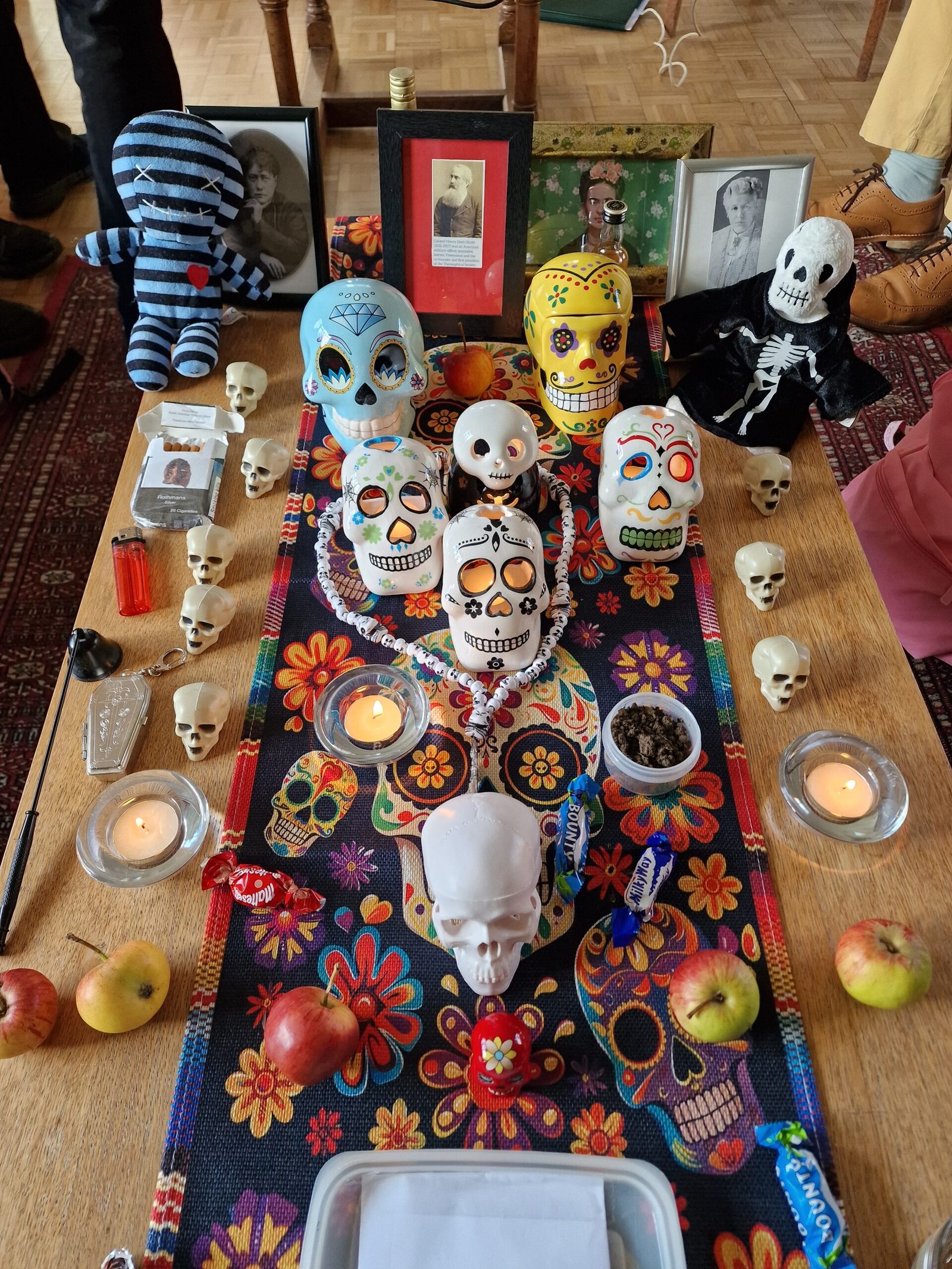
Altars reflect this with toys, sweets, miniature objects, and child-sized offerings. Death here isn’t one-size-fits-all.
5. Eating the Offerings Is Allowed (Mostly)
Unlike some traditions where altar food is untouchable, Day of the Dead offerings are often shared and eaten. This is very different from offerings to Santa Muerte, which are considered spiritually “tainted.” Know your spirits before snacking.
6. Empty Chairs Are an Ancient, Global Gesture
Setting places at the table for the dead isn’t uniquely Mexican. It shows up in pagan, Jewish, Chinese, Polish, and occult traditions worldwide. An empty chair says: you’re still part of this family.
7. The Mayan Cosmos Explains a Lot
To understand Day of the Dead properly, you need to understand Mayan cosmology:
- Three realms: earth, heavens, underworld
- A cosmic tree connecting them all
- Jaguars, caves, water, and time behaving strangely
Ancestors never really leave. They just change where — and how — they exist.
8. Death Gods, Spirit Companions, and Burning Souls
Mayan death gods weren’t gentle. Kizin (also known as Arpuk) burns souls, douses them, burns them again — until they’re purified enough to move on. Brutal? Yes. But also part of a worldview where death is transformation, not punishment.
9. How You Died Mattered More Than How You Lived
For the Aztecs, morality wasn’t the issue — cause of death was destiny.
- Natural death → Mictlan (after a four-year journey)
- Warriors → the rising sun
- Women who died in childbirth → the setting sun
- Drowning, lightning, disease → rain gods
No hell. No damnation. Which, unsurprisingly, made Catholic conversion a tough sell.
10. Remembering Is the Opposite of Death
Across cultures — Mexico, China, Ireland, England — the greatest fear isn’t dying. It’s being forgotten. Names, bones, skulls, photos, stories, meals, festivals — these are technologies of remembrance. As long as someone is remembered, they aren’t entirely gone.
Final Thought:
The Day of the Dead isn’t morbid.
It’s honest.
It refuses to sanitise grief, deny mortality, or outsource death to hospitals and euphemisms. Instead, it says: Sit with it. Eat with it. Laugh with it. Talk about it.
A reunion of the living and the dead
“In rural communities in Mexico, the Day of the Dead is traditionally a more private family time, which is similar to what’s been mentioned earlier, and still celebrational, but more of a reunion, not just a coming together of family members on the physical plane, but a coming together of both the living and the dead.”



testttt